&geometry(152x150) "Adams Luxury Travel")
How Far in Advance Should You Plan a Destination Wedding?
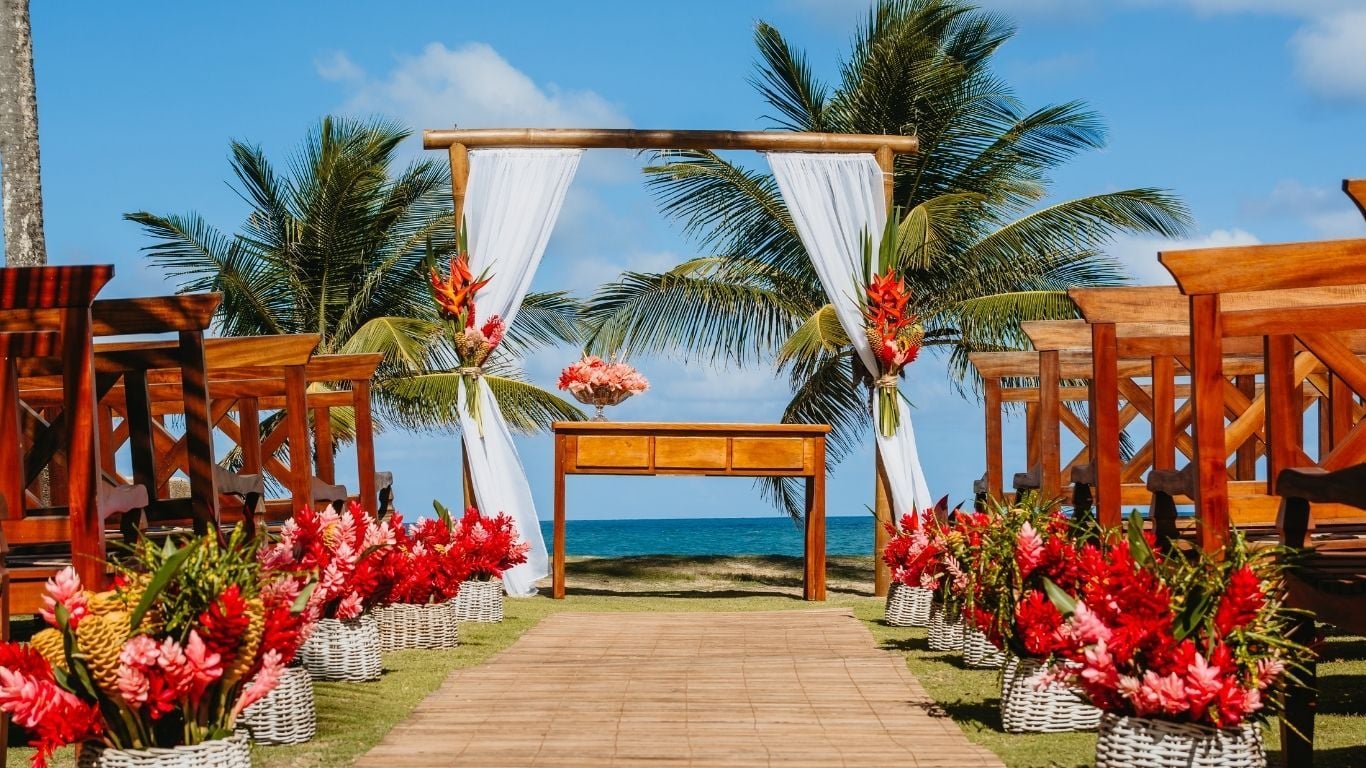 "How Far in Advance Should You Plan a Destination Wedding?")
A destination wedding combines two extraordinary experiences: celebrating one of the most important days of your life and travelling somewhere beautiful with the people who matter most.
But planning a wedding away from home also introduces additional considerations. Instead of simply choosing a venue and coordinating local vendors, you may need to think about flights, resorts, passports, guest accommodations, airport transfers, wedding packages, room blocks, travel insurance, and the logistics of bringing everyone together in another destination.
So, how far in advance should you plan a destination wedding?
For many couples, beginning the planning process approximately 12 to 18 months before the wedding provides a comfortable amount of time. For highly sought-after resorts, larger groups, popular wedding dates, or more complex international celebrations, starting 18 to 24 months ahead can provide even greater flexibility.
That doesn't mean a destination wedding can't be planned within a shorter timeframe. It certainly can. However, planning earlier usually means having more choices when it comes to destinations, resorts, wedding dates, room categories, flights, and accommodations for your guests.
The ideal timeline ultimately depends on where you want to go, how many people you're inviting, the type of celebration you envision, and how much flexibility you have with your wedding date.
Let's break down what you should be thinking about at each stage.
Why Destination Weddings Require More Advance Planning
Planning a local wedding typically involves coordinating the ceremony, reception, vendors, and accommodations. A destination wedding includes all of those considerations while adding an entire travel experience.
Your guests may be travelling internationally, potentially taking vacation time from work and budgeting for airfare and accommodations. Some may need to renew passports, arrange childcare, or coordinate travel around other commitments.
Meanwhile, the couple may need to organize several interconnected elements, including the resort, wedding package, ceremony location, room block, flights, transfers, excursions, and pre- or post-wedding travel.
Starting early gives everyone more time to prepare.
It also allows the couple to enjoy the planning process instead of making major decisions under pressure.
18-24 Months Before: Start Building Your Destination Wedding Vision
If you're planning well in advance, this is the perfect time to think broadly about what you want your wedding experience to look like.
You don't necessarily need every detail decided yet.
Instead, begin with the bigger questions.
Do you imagine getting married barefoot on a Caribbean beach? Would you prefer an elegant ceremony at a luxury resort in Mexico? Perhaps you've always dreamed of exchanging vows overlooking the Mediterranean or celebrating somewhere surrounded by tropical gardens.
Consider your preferred:
- Destination
- Time of year
- Approximate guest count
- Overall budget
- Resort style
- Wedding atmosphere
- Adults-only or family-friendly environment
Your guest list is particularly important at this stage.
You don't need a final number, but knowing whether you're expecting approximately 20 guests or 100 will significantly influence the resorts and wedding packages that make sense.
This is also an excellent time to begin working with a professional travel advisor who specializes in destination weddings.
A travel advisor can help narrow down destinations and resorts based on your priorities rather than leaving you to compare hundreds of properties yourself.
12-18 Months Before: Choose Your Destination and Resort
For many couples, the 12-to-18-month window is the ideal time to make the major decisions.
By this point, you should begin narrowing down your destination and selecting the resort or venue where your wedding will take place.
This is one of the most important decisions you'll make.
A beautiful resort doesn't automatically make it the right destination wedding resort.
You'll want to consider factors such as the quality of the wedding packages, ceremony locations, accommodations, restaurants, group amenities, airport accessibility, and activities available for guests.
It's also important to think about the different people attending your wedding.
If children are invited, an adults-only resort obviously won't work. If grandparents or guests with mobility considerations are attending, resort accessibility may become particularly important.
Other questions to consider include:
- How far is the resort from the airport?
- Are direct flights reasonably accessible for your guests?
- What types of rooms and suites are available?
- Does the resort accommodate groups well?
- What ceremony and reception locations are available?
- What dining options are included?
- Are there activities for different ages and interests?
- What happens if it rains on the wedding day?
This is where professional destination knowledge can be extremely valuable. Resort websites can make almost every property look spectacular, but a travel advisor can help you evaluate how well a property actually matches your group.
12-16 Months Before: Secure Your Wedding Date
Once you've chosen your destination and preferred resort, the next major step is securing your wedding date.
Popular dates can disappear quickly, particularly during desirable travel seasons.
Couples who have very specific requirements—such as a particular Saturday, ceremony location, or sunset wedding time—will generally benefit from reserving as early as possible.
Flexibility can help.
A weekday destination wedding, for example, may provide more availability than a Saturday celebration. Because guests are already travelling for several days, destination weddings don't necessarily need to follow the traditional weekend wedding schedule.
You should also consider the destination's seasonal conditions before selecting the date.
Factors can include:
- Rainy seasons
- Hurricane seasons
- Extreme temperatures
- Local holidays
- School breaks
- Spring break
- Christmas and New Year's travel
- Major festivals or events
The cheapest travel period isn't necessarily the best time for your wedding, just as the most popular season isn't automatically the right choice.
The goal is to find the right balance between weather, availability, guest convenience, and budget.
10-14 Months Before: Send Save-the-Dates
Save-the-dates are especially important for destination weddings.
Unlike a local wedding where guests may only need to reserve an evening or weekend, attending a destination wedding can require several days away from home.
Giving guests plenty of notice allows them to:
- Request vacation time.
- Review their budget.
- Arrange passports.
- Organize childcare or pet care.
- Coordinate flights.
- Plan additional vacation time around the wedding.
Your save-the-date should clearly communicate that this is a destination wedding and provide enough preliminary information for guests to begin preparing.
If you've already established a wedding website, this is also an excellent place to provide travel information and updates as planning progresses.
9-12 Months Before: Organize Guest Accommodations and Travel
Once your resort and wedding date are confirmed, attention can turn toward guest travel.
Coordinating accommodations for a destination wedding can become complicated surprisingly quickly.
Different guests may want different room categories, travel dates, flight options, and budgets. Families may require larger accommodations, while couples may prefer upgraded suites or ocean-view rooms.
Rather than having dozens of guests independently contacting the couple with travel questions, working with a travel advisor provides a centralized point of support.
Your advisor can help guests understand their options, coordinate accommodations, and navigate the travel process.
This takes a significant administrative burden away from the couple.
Instead of answering messages about room categories, airport transfers, and travel arrangements in the weeks leading up to your wedding, you can focus on the celebration itself.
6-9 Months Before: Begin Refining the Wedding Experience
With the major travel arrangements underway, you can begin focusing on the details that will make the celebration feel uniquely yours.
Depending on the resort and wedding package, this may include decisions about:
- Ceremony décor
- Flowers
- Reception style
- Menu selections
- Music
- Photography
- Entertainment
- Hair and makeup
- Wedding cake
- Private events
You may also want to plan experiences outside the wedding itself.
One of the greatest advantages of a destination wedding is that the celebration can extend well beyond the ceremony.
Consider arranging a welcome cocktail reception, group dinner, private excursion, catamaran cruise, beach gathering, or farewell brunch.
These shared experiences are often what make destination weddings particularly memorable.
Your guests haven't simply travelled to watch you get married. They're enjoying a vacation and celebration alongside you.
6 Months Before: Review Passports and Entry Requirements
Don't leave passport checks until the final few weeks.
The couple and all guests travelling internationally should verify their travel documents well in advance.
Depending on the destination, passports may need to remain valid for a specified period beyond the date of travel. Entry rules can also differ based on a traveler's nationality.
Couples should encourage guests to check applicable requirements through the appropriate official government sources rather than relying on old travel articles or social media posts.
Guests should also review whether their destination requires visas, electronic travel authorizations, or other documentation.
These requirements can change, making it important to check again closer to departure.
4-6 Months Before: Plan Excursions and Group Experiences
At this stage, you should have a much clearer idea of who is attending.
Now you can start thinking about optional group activities.
Perhaps you'd like everyone to enjoy a sunset catamaran cruise before the wedding. Maybe you want to organize a snorkeling excursion, private island tour, cooking experience, or group dinner.
You don't need to schedule every moment.
In fact, one of the keys to a successful destination wedding is giving guests enough free time to enjoy their vacation.
A good itinerary balances organized events with personal time.
Guests should be able to relax at the beach, explore the resort, book their own excursions, or simply spend an afternoon by the pool.
3-4 Months Before: Confirm Important Wedding Details
As the wedding approaches, begin reviewing your arrangements with the resort and wedding coordinator.
Confirm the major elements of the celebration and identify anything that still requires a decision.
This is also a good time to review your guest list and ensure everyone understands their travel arrangements.
If some guests haven't booked yet, availability may now be more limited, particularly within your preferred room categories.
Couples should also begin thinking about what they're bringing with them.
If you're travelling with wedding attire, décor, gifts, or other important items, decide how they will be transported safely.
Whenever possible, essential wedding items should travel with you rather than in checked baggage.
1-2 Months Before: Finalize the Details
By this point, the major planning should be complete.
The final weeks should focus on confirmations rather than major decisions.
Review:
- Flight details
- Airport transfers
- Resort reservations
- Wedding arrangements
- Guest bookings
- Excursions
- Travel insurance documentation
- Passport requirements
- Important contact information
You may also want to provide guests with a simple final itinerary explaining where they need to be and when.
Keep it straightforward.
Guests don't need a minute-by-minute schedule. They simply need to know about important events such as the welcome gathering, ceremony, reception, group excursion, and farewell event.
1-2 Weeks Before: Stop Planning and Start Getting Excited
Ideally, very little should remain to organize at this stage.
Confirm your documents, pack carefully, and ensure your wedding attire and other essential items are ready for travel.
Download your airline and resort apps if applicable and keep digital copies of important documents readily accessible.
Then give yourself permission to stop planning.
You've spent months organizing this experience. The final days before departure should be about excitement—not scrambling to solve logistical problems.
Can You Plan a Destination Wedding in Less Than a Year?
Absolutely.
While 12 to 18 months provides greater flexibility, many beautiful destination weddings are successfully organized within six to twelve months.
A shorter planning period works particularly well when the couple is flexible about:
- Destination
- Resort
- Wedding date
- Ceremony time
- Room categories
The biggest consideration is often guest availability.
While the couple may be ready to travel within six months, some guests may struggle to arrange vacation time or budget for an international trip on relatively short notice.
If you're working with a shorter timeline, having an experienced destination wedding travel advisor can become even more valuable. Instead of spending weeks researching possibilities, your advisor can quickly narrow down realistic options based on current availability and your priorities.
What About Planning More Than Two Years Ahead?
Starting early is helpful, but there can be such a thing as starting too early.
Some resorts, airlines, and travel suppliers may not have schedules or pricing available several years in advance.
If your wedding is more than two years away, use this period to research destinations, establish a realistic budget, develop your guest list, and determine the type of celebration you want.
Then, as booking windows begin to open, you'll already know what you're looking for.
Don't Forget the Guest Experience
It's easy to become focused entirely on the ceremony, but a destination wedding is also a significant commitment for your guests.
They're investing money, vacation time, and effort to celebrate with you.
Think about their experience from the moment they leave home until the moment they return.
Is the destination reasonably accessible?
Are there accommodation choices that suit different needs?
Will guests have things to do outside the wedding?
Is there enough free time?
Are the travel instructions clear?
Thoughtful planning doesn't mean paying for everyone's vacation. It means making the experience as straightforward and enjoyable as possible.
When guests feel informed and supported, everyone can relax and enjoy the celebration.
Why Work With a Travel Advisor for a Destination Wedding?
Destination wedding planning sits at the intersection of two complex areas: weddings and international travel.
A resort wedding coordinator may help manage the ceremony and events taking place at the property, but there are still travel arrangements to consider before everyone arrives.
A professional travel advisor can assist with the travel side of your celebration, helping with destination and resort selection, accommodations, flights, transfers, group arrangements, travel insurance considerations, and guest questions.
This separation of responsibilities can make the entire process far easier to manage.
Instead of becoming the unofficial travel agent for every person attending your wedding, you have someone who can help guide guests through the process.
For couples, that means fewer logistical headaches and more time to enjoy the experience they've been looking forward to.
Your Destination Wedding Should Feel Like a Celebration, Not a Project
So, how far in advance should you plan a destination wedding?
For most couples, 12 to 18 months is an excellent starting point, while 18 to 24 months can provide additional flexibility for larger weddings, highly desirable resorts, or specific dates. A shorter timeline can also work beautifully when you're flexible and have experienced guidance.
The most important thing is not simply starting early—it's using that time effectively.
A thoughtfully planned destination wedding gives you and your guests the opportunity to enjoy much more than a ceremony. It becomes a shared vacation filled with celebrations, new experiences, beautiful surroundings, and memories you'll carry home long after the wedding day.
At Adams Luxury Travel, we can help take the complexity out of planning the travel portion of your destination wedding. From finding a destination and resort that fits your vision to coordinating accommodations and helping your guests navigate their travel arrangements, personalized planning allows you to spend less time worrying about logistics and more time looking forward to your celebration.
Ready to start planning your destination wedding? Contact Adams Luxury Travel today to schedule a complimentary discovery call and begin turning your wedding vision into an unforgettable travel experience.